Pages

Ads 468x60px

Saturday, March 8, 2014

Indian States and Union Territories

India is a union of a number of states and union territories.  It is a Sovereign Socialist Secular Democratic Republic with Parliamentary System of Government.  The Indian Republic is governed in terms of the constitution, which was adopted on 26th November, 1949 and came into force on 26th January, 1950.   At present as on today, India has 28 States and 7 Union Territories.


The States Reorganization Act of 1956 was an important force in reorganizing the boundaries of various States of India along linguistic lines, and bringing an amendment in Indian Constitution where by 3 types of states, known as Parts A, B and C states were amended with single type of state.   

3 new states were formed in November, 2000 - Chattisgarh was carved out of Madhya Pradesh.  Uttaranchal was carved out from Uttar Pradesh and Jharkhand out of Bihar.  The Indian Constitution distributes the legislative powers between the Parliament and State legislatures.  The Indian Parliament comprises of two houses - lower house is known as Lok Sabha ( House of People ) and the upper house is called as Rajya Sabha ( Council of States ).  At State level, some legislatures are bicameral and are run along the lines of the two houses of national Parliament.

India blessed with natural beauty, population, religions, cultures, languages has 28 states and seven union territories.   Each state and union territory is unique in its own way.   Here is a list of all Indian States and Union Territories as on today listed along with capital cities.

States of India

  • Andhra Pradesh - Hyderabad
  • Arunachal Pradesh - Itanagar
  • Assam - Dispur
  • Bihar - patna
  • Chattisgarh - Raipur
  • Goa - panaji
  • Gujarat - Gandhi Nagar
  • Haryana - Chandigarh
  • HImachal Pradesh - Shimla
  • Jammu & Kashmir - Sri Nagar (Summer),  Jammu (Winter)
  • Jharkhand - Ranchi
  • Karnataka - Bengaluru
  • Kerala - Trivandrum
  • Madhya Pradesh - Bhopal
  • Maharashtra - Mumbai
  • Manipur - Imphal
  • Meghalaya - Shillong
  • Mizoram - Aizawl
  • Nagaland - Kohima
  • Odisha - Bhubaneshwar
  • Punjab - Chandigarh
  • Rajasthan - Jaipur
  • Sikkim - Gangtok
  • Tamil Nadu - Chennai
  • Tripura - Agartala
  • Uttar Pradesh - Lucknow
  • Uttar Khand - Dehradun
  • West Bengal - Kolkata


Union Territories of India

  • Andaman & Nicobar islands - Port Blair
  • Chandigarh - Chandigarh
  • Dadar Nagar haveli - Silvassa
  • Daman and Diu - Daman
  • Delhi - Delhi
  • Lakshadweep - Kavaratti
  • Pondicherry - Pondicherry


Here is a  brief about some of the popular states and Union Territories of India.

Goa

Situated in the Malabar Coast of India Goa is the best beach resort in India. Populated with a mix of Christians and Hindu's Goa's culture is unique in its own kind. Known as the most happening states in India Goa is home to fun loving and easy going people. The major attraction in the state is its long stretches of pristine beaches. Some of the important beaches in Goa are; Colva, Vagator, Calangute, Harmal, Anjuna and Miramar and Baga.

Andaman and Nicobar Islands

Popular as the Emerald Isles the Andaman and Nicobar islands situated in the Bay of Bengal.  It is  one of the popular tourist's destinations in India. The union territory is home to numerous aboriginal tribes and two distinct native cultures the Negrito and the Andamans. Known to be a friendly and cheerful lot of people the population of Andaman and Nicobar islands enjoy festivities such as Panguni, Pongal, Shivratri, Uthiram, Janmastami etc. Some of the popular tourist spots in the union territory include National Memorial, Marine Museum, Naval Marine Museum, Smrithika Museum, Haddo Zoological Garden.

Andhra Pradesh

Located in the southern region of India, Andhra Pradesh happens to be the third largest state in the country. Reputed for its distinct culture and fine arts Andhra Pradesh is mostly dominated by Telugu speaking people. The important festivals celebrated in the state are Dasara, Deepavali, Sri Ramanavami, Vinayaka Sankranti and Chavithi. The places which are a definite must see in the state include Nehru Zoological Park, Hussain Sagar Lake, State Museum and Art gallery, Salarjung Museum, Ethurnagaram sanctuaries etc.

 Arunachal Pradesh

Ranked as the most charming state in India Arunachal Pradesh is characterized by lofty mountains and snow clad peaks. Home to numerous tribes and sub tribes the population of Arunachal Pradesh consists mostly of people of Asiatic origin. The one thing that is unique about the state is its belief in animism. Beautiful as it is the state is home to several popular tourist hubs like Sinyi Bomdila, Tawang and Gyaker.

Assam (Asom)

Situated in northeastern India Assam abounds in natural beauty. The population of Assam is said to be a mix of people of Tibetan, Aryan, and Burman origins. The population of Assam is made up of numerous tribes who believe in celebrating all the religious festivals with equal vigor. However the one festival that is most popular in Assam is Bihu. Assam over the years has also developed into an important tourist destination with attractions such as Gandhi Mandap, Kamakhya Temple, Umananda, Nabagraha (Temple of nine planets), State Zoo, State Museum etc.

Dadra & Nagar Haveli

Lying in close proximity to the west coast of India Dadra & Nagar Haveli is home to a mass of shy and simple Adivasis. Evolving as an important hub for tourist this union territory houses numerous tourist attractions like The Tribal Cultural Museum, Khanvel, The Vanganga Lake and Island Garden.

Bihar

Situated in Eastern India, Bihar boasts of a rich cultural heritage that dates back to ancient India. The people of Bihar are lively and co exists in peace and harmony. The locals are known as Bihari's and festivals celebrated in the state include Buddha Purnima, Saraswati Puja, Eid-ul-Fitr, Holi, Rath yatra, Maha Shivaratri and Mahavir Jayanti.

Apart from these the other states and union territories in India are Chhattisgarh , Gujarat, Haryana, Himachal Pradesh, Jammu and Kashmir, Jharkhand, Karnataka, Kerala, Madhya Pradesh, Chandigarh, Maharashtra, Manipur, Meghalaya, Mizoram, Nagaland, Orissa, Punjab, Rajasthan, Sikkim, Tamil Nadu ,Tripura , Uttarakhand , Uttar Pradesh and West Bengal.

Uttaranchal is the latest introduction to the Indian states list and is foreseen as a booming industrial region in the next few decades.

States like Manipur, Sikkim, Meghalaya, Mizoram and Nagaland are known for their distinct culture which is very different from the rest of the country. The popular festivals celebrated in these regions include; Sekrenyi, Moatsu, Tuluni in Nagalanad, Ka Pomblang Nongkrem in Meghalaya, Chapchar Kut and Pawl Kut in Mizoram. Sikkim celebrates most of the Hindu and Buddhist festivals that are celebrated across the country and Ingol Chakouba and Yaoshang in Manipur.

Chandigarh, Jammu and Kashmir and Haryana situated in the northern part of India are known for their natural beauty and serve as ideal tourist destinations in the country. Janmastami, Idul Fitr, Lohri and Diwali are the common festivals celebrated with much enthusiasm in these parts of the country.

The southern part of India comprising Karnataka, Kerala, and Tamil Nadu is of prime importance from the tourism point of view as these places attract millions of tourists from different parts of the globe.

Other important Indian states that have still manage to preserve the cultural heritage of the country include; Uttar Pradesh, Punjab, Rajasthan, West Bengal Madhya Pradesh Maharashtra, Gujarat and Himachal Pradesh.

Friday, March 7, 2014

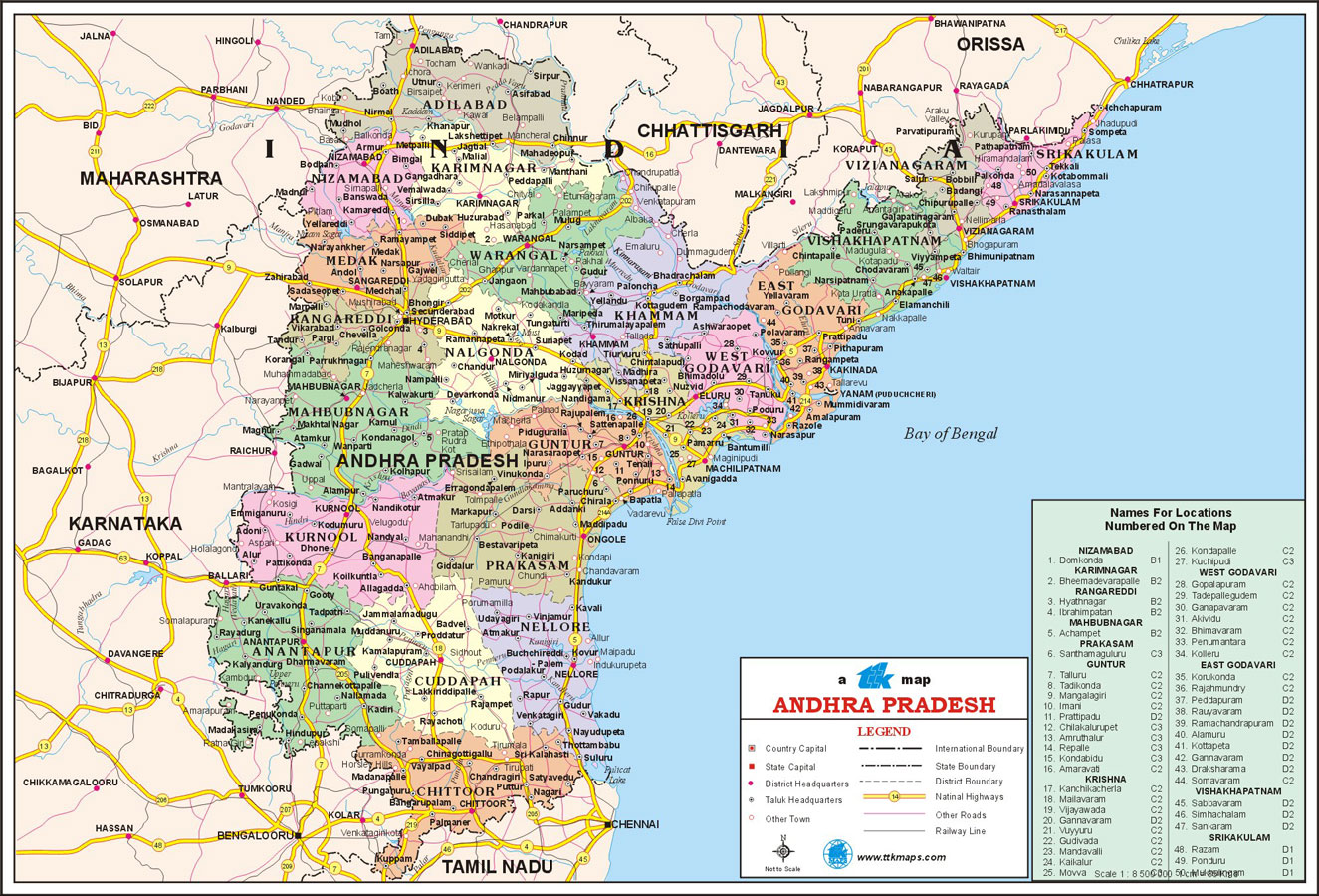
United Andhra Pradesh - the first linguistic state of India


Andhra Pradesh is one of the state of the country, which takes pride in its rich historical and cultural heritage. A peek into the History of Andhra Pradesh can give an idea of the glorious past the state has witnessed. 


Andhra Pradesh is the first State formed based on linguistic basis.  Let us see a brief history of Andhra Pradesh.

The origin of Andhra Pradesh

 The historians believe that the Andhra Pradesh people were Aryans.  These people migrated to the south of Vindhyas and they mixed up with other races.  Andhra Pradesh which was a major part of Emperor of Ashoka's kingdom was an important Buddhist center of that time. Many places of the state still bears the traces of the Buddhist culture and influence.


The earlier period

One of the earliest dynasty which ruled Andhra Pradesh is the Satavahana dynasty.  This was during the second century B.C and they were also known as Andhras.  The capital city at that time was Amaravathi which was on the banks of river Krishna. They promoted national and international trade and were great followers of Buddhism. After the end of the Satavahana reign, the state was ruled by the Pallavas, the Chalukyas, the Cholas and the Kakaityas respectively. 

The Kakatiya dynasty was uprooted in 1323.  Their ruler was captured by Tughlak Sultan of Delhi.  After the end of Kakatiya dynasty, some local kingdoms rose to power in different parts of the kingdom.  One of those was the Vijayanagar Kingdom was the most powerful.  King Krishnadeva Raya belonged to this kingdom.  The Vijayanagar kingdom was finally captured by Mulsim invaders.    The Qutb Shahi dynasty was seen by the state in middle of 16th century.  They were defeated by the Mughals, to be precise by Aurangazeb's son.  

Hyderabad was declared independent in 1707 and went under the rule of the Nizams.  The Nizams were great allies of the British and they helped the Europeans to defeat Tipu Sultan of Mysore.


The post independence period

Andhra Pradesh became the first state to be formed on basis of language after independence. 21 districts were given to Telugu speaking people out of which nine were in the Nizam's dominions and the rest are in Madras Presidency.  But after an agitation in 1953, 11 districts of the Madras presidency were taken out to form a new Andhra State with Kurnool as the capital. Nine districts under the Nizam rule were later added to form the combined Andhra Pradesh in 1956.  Hyderabad became the capital of the new Andhra Pradesh State.  Hyderabad was one of the most technologically advanced cities of modern India.

Saturday, December 28, 2013

First happenings in India - Nobel Prizes

Here is the list of first in Nobel prizes happened in India

First Noble Prize Winner Rabindranath Tagore for the Noble Prize in Literature, 1913.
He was also the first Asian to get the Prize.
First Noble Prize in Physics C.V. Raman in 1930
First Noble Prize in Medicine Har Gobind Khorana in 1968. (Indian Born US Citizen)
First Noble Peace Prize Mother Teresa in 1979. (Albanian nun, Indian Citizen)
First Noble Prize in Economics Amartya Sen in 1998

First in Governance in India

Here is the list of First in Governance in India

First President of India Dr. Rajendra Prasad (1950-1962)
First Prime Minister of India Jawaharlal Nehru (1947-1964). The first term lasted till 1952 after which he was re-elected.
First Vice President of India Dr. S Radhakrishan
First Deputy Prime Minister of India Vallabhbhai Patel
First Prime Minister to be voted out of Office India Ghandi (1977) when the Indian National Congress lost to he Janta Party.
First Sikh Prime Minister Manmohan Singh
First Sikh President Giani Zail Singh
First Non-Congress Government by Janta Party with Morarji Desai as the Prime Minister (1977-1980)
First Prime Minster of India resigned without completing his full term Morarji Desai
First Prime Minister to lead a minority government for a full term(five years) P.V. Narasimha Rao, June 21, 1991 to May 16 1996
First Prime Minster from South India P.V. Narasimha Rao, June 21, 1991 to May 16 1996
First Governor-General Warren Hastings
First British Governor-General Lord William Bentick
First British Viceroy of India Lord Canning
First Governor General of Independent India Lord Mountbatten, 1947
First and Last Indian Governor-General of Indian Union C Rajagopalachari, 1948
First Chief Justice of India Justice Hiralal J Kania
First Indian to pass ICS Surendra Nath Banerjee
First Indian ICS Officer Satyendranath Tagore, 1863
First Speaker of Lok Sabha Shri G.V. Mavlankar
First Finance Minister of Independent India Shri R.K.Shanmukhan Chettys
Presentation of First Budget after India's Independence Shri R.K.Shanmukhan Chettys on Nov. 26, 1947
First President to die in Office Dr. Zakhir Hussain
First Prime Minister who did not face the Parliament Charan Singh
First Chief Justice of Supreme Court to become President of India Justice M Hidaytullah
First Education Minister Abul Kalam Azad
First Home Minister Sardar Vallabhbhai Patel
First Chief Election Commissioner Sukumar Sen
First Minister to regin from Union Cabinet Shyama Prasad Mukherjee (1950)

First in India Happenings - Female

Following are first in India happenings - Females

first lady to become Miss World Rita Faria
The first woman judge in Supreme Court Mrs. Meera Sahib Fatima Bibi
The first woman Ambassador Miss C.B. Muthamma
The first woman Governor of a state in free India Mrs Sarojini Naidu
The first woman Speaker of a State Assembly Shanno Devi
The first woman Prime Minister Mrs Indira Gandhi
The first woman Minister in a Government Rajkumari Amrit Kaur
The first woman to climb Mount Everest Bachhendri Pal
The first woman to climb Mount Everest twice Santosh Yadav
The first woman President of Indian National Congress Mrs Annie Besant
The first woman pilot in Indian Air Force Harita Kaur Dayal
The first woman Graduates Kadambini Ganguly and Chandramukhi Basu, 1883
The first woman Airline Pilot Durba Banerjee
The first woman Honours Graduate Kamini Roy, 1886
The first woman Olympic medal Winner Karnam Malleswari, 2000
The first woman Asian Games Gold Medal Winner Kamlijit Sandhu
The first woman Lawyer Cornelia Sorabjee
The first woman President of United Nations General Assembly Mrs Vijaya Laxmi Pandit
The first woman Chief Minister of an Indian State Mrs Sucheta Kripalani
The first woman Chairman of Union Public Service Commission Roze Millian Bethew
The first woman Director General of Police Kanchan Chaudhary Bhattacharya
The first woman Judge Anna Chandy (She became judge in a district court in 1937)
The first woman Cheif Justice of High Court Mrs Leela Seth (Himachal Pradesh High Court)
The first woman Judge in Supreme Court of India Kumari Justice M. Fathima Beevi
The first woman Lieutenant General Puneeta Arora
The first woman Air Vice Marshal P. Bandopadhyaya
The first woman chairperson of Indian Airlines Sushma Chawla
The first woman IPS officer Mrs. Kiran Bedi
The first and last Muslim woman ruler of India Razia Sultan
The first woman to receive Ashoka Chakra Nirja Bhanot
The first woman to receive Jnanpith Award Ashapurna Devi
The first woman to cross English Channel Aarti Saha
The first woman to receive Nobel Prize Mother Teresa
The first woman to receive Bharat Ratna Mrs Indira Gandhi
The first woman to receive Jnanpith Award Ashpurna Devi

First in India Happenings - Male

Following are first in India happenings - Males

The first President of Indian Republic Dr. Rajendra Prasad
The first Prime Minister of free India Pt. Jawahar Lal Nehru
The first Indian to win Nobel Prize Rabindranath Tagore
The first President of Indian National Congress W.C. Banerjee
The first Muslim President of Indian National Congress Badruddin Tayyabji
The first Muslim President of IndiaDr. Zakir Hussain
The first British Governor General of IndiaLord William Bentinck(1833-1835)
The first British Governor General of BengalLord Warren Hasting(1774-1885)
The first British Viceroy of India Lord Canning
The first Governor General of free India Lord Mountbatten
The first and the last Indian to be Governor General of free India C. Rajgopalachari
The first man who introduced printing press in India James Hicky
The first Indian to join the I.C.S Satyendra Nath Tagore
India’s first man in SpaceRakesh Sharma
The first Prime Minister of India who resigned without completing the full termMorarji Desai
The first Indian Commander-in-Chief of IndiaGeneral Cariappa
The first Chief of Army StaffGen. Maharaj Rajendra Singhji
The first Indian Member of the Viceroy’s executive councilS.P.Sinha
The first President of India who died while in officeDr. Zakhir Hussain
The first Muslim President of Indian RepublicDr. Zakhir Hussain
The first Prime Minister of India who did not face the Parliament Charan Singh
The first Field Marshal of IndiaS.H.F. Manekshaw
The first Indian to get Nobel Prize in PhysicsC.V.Raman
The first Indian to receive Bharat Ratna award Dr. Radhakrishnan
The first Indian to cross English Channel Mihir Sen
The first Person to receive Jnanpith award Sri Shankar Kurup
The firs Speaker of the Lok Sabha Ganesh Vasudeva Mavalankar
The first Vice-President of India Dr. Radhakrishnan
The first Education Minister Abdul Kalam Azad
The first Home minister of India Sardar Vallabh Bhai Patel
The first Indian Air Chief Marshal S. Mukherjee
The first Indian Naval Chief Vice Admiral R.D. Katari
The first Judge of International Court of Justice Dr. Nagendra Singh
The first person to reach Mt. Everest without oxygen Sherpa Anga Dorjee
The first person to get Param Vir Chakra Major Somnath Sharma
The first Chief Election Commissioner Sukumar Sen
The first person to receive Magsaysay Award Acharya Vinoba Bhave
The first person of Indian origin to receive Nobel Prize in Medicine Hargovind Khurana
The first Chinese traveller to visit India Fahein
The first person to receive Stalin Prize Saifuddin Kitchlu
The first person to resign from the Central Cabinet Shyama Prasad Mukherjee
The first person to receive Nobel Prize in Economics Amartya Sen
The first Chief Justice of Supreme Court Justice Hirala J. Kania
The first Indian Pilot J.R.D. Tata (1929)


Saturday, August 17, 2013

Tourist Attractions in New Delhi

New Delhi is one of the most historic capitals in the world.  So there are lot of tourist places of attraction in New Delhi.  This article gives the details of the tourist attractions of New Delhi.

The Old Delhi has attractions like monuments, mosques which represent Indian history.  Some of the important places of interest at old Delhi are Majestic Red Fort.  New Delhi has many Government buildings apart from places of historical interest.   The Qutub Minar, Red Fort and Humayun's Tomb are listed as UNESCO World Heritage Sites.  Here is a list of tourist places in New Delhi.

Tourist Attractions in New Delhi


There are lot of tourist places of attractions in New Delhi to explore and visit.  New Delhi is an international city with excellent tourist attractions and historic places.  New Delhi is one of the dream city of visitors looking for handicraft items.  There are lot of places of tourist interest and it is very difficult to decide from where to start exploring the city.  Let us now see some of the interesting places of tourist attraction in New Delhi.

India Gate :   India Gate is situated along the ceremonial Rajpath avenue ( means King's way) in New Delhi.  India Gate is constructed as a memorial and was built in the memory of 9,000   Indian soldiers who laid down their lives in World War I.  The shrine in the middle is constructed with black marble and shows a rifle placed on its barrel, crested by a soldier's helmet.  You can see the words "Amar Jawan" ( in Hindi meaning immortal warrior) inscribed on each face of the shrine.  The India Gate is 42 meters high and a popular relaxation area during evenings.  It is also a popular picnic spot during winters.  India Gate was designed and constructed by Lutyens who is an architect who designed Government buildings in New Delhi.  Celebrations are made every year on Republic Day.    The army men and other citizens who are awarded walk through the Rajpath.  The India Gate is a must visit place in New Delhi. 

Red Fort The Mughal emperor Shah Jahan has built the Red Fort.  Red Fort is popularly known as Lal Quila and represents the true splendor of Mughal court.   The walls of the Red Fort are 2 Kms. long.  This Fort is built in Old Delhi.
 
The Red Fort is made out of marble and well designed. The Red Fort was built by Shah Jahan in 1638 when he decided to shift his capital from Agra to Delhi.  The walls of Red Fort are 33 meters above the ground level and built by Red Sandstone.  The walls were designed to keep out the invaders.  The main gate of Red Fort is the Lahore Gate is one of the emotional and symbolic focal points of modern India and attracts major crowd on Independence day.

The construction of Red Fort by red color sandstone gave it the name as Red Fort.  It took 10 years to complete the construction of the Red Fort.  The Fort has a perimeter of 2.5 kilo meters. Various sections in the fort were built according the specific functions.  The "Deewan-e-Aam" is a hall built for general public to interact with the emperor.  "Deewan-e-Khas" is another hall made of natural stones used for private meetings of the emperor.  The "Hammams" is the bath place specially built for the royal family.  "Shahi Burj" is another place where the emperor's office was built.  "rang Mahal" is a special place built for the wives of the emperor.

 "Naqqar Khana" is another place in the fort where musicians would play music specific to the particular time of the day.  The Red Fort is used for addressing the nation on the Independence day of India by Prime Minister of India each year.

Red fort is in Nethaji Subhas marg.  The nearest metro station is chandni chowk.  The entry fee for Indians is Rs.10 and Rs.250 for foreigners.  You need to pay Rs.25 if you want to take video in Red Fort. Monday is closed for visitors.   The sound and light show is an attraction in Red Fort which starts at 6 PM and the ticket amount is Rs.80.  

Rashtrapati Bhavan The Rashtrapati Bhavan is  the eminent monument of British Empire which is said to be the palace of Viceroy of India.  This is the best known monument of India next to Taj Mahal and Qutub Minar.  

The Rashtrapati Bhavan is  built with a mix of western and Indian styles and was originally for the Governor General of India.  The building was inaugurated in 1931 as Viceregal Lodge, the name was changed in 1950 after India became Republic.  

The Rashtrapati Bhavan is the official residence of President of India.  This is the real master piece which was built during the British period.  The total cost of construction of this building crossed £1,253,000 in British India. Rashtrapati Bhavan was designed by Edwin Lutyens and the construction work began in 1911.  It took 19 years to complete.  Lord Edwin, the then Viceroy and Governor General of India was the first to live in this building in 1931.

The dome like structure on top of Rashtrapati Bhavan is known as Chuttri.  The front of the Rashtrapati Bhavan on east side has 12 unevenly spaced columns with the Delhi order capitals.   In the north block, there is a separate wing for the Viceroy and another wing for the guests.  There is a Durbar Hall at the center of the main part of the palace under the main dome.  The dome of the hall measures 22.8 meters in diameter.  You can see the Viceroy's throne in this hall. Today, the Durbar Hall is the major venue of all official ceremonies of the Indian Government such as the oath taking ceremony by the Prime Minister, the Cabinet and the Members of Parliament. The Arjuna Awards for Excellence is also presented in this hall of the Rashtrapati Bhawan.

Rashtrapati Bhavan has the following:
  • The State Drawing Room
  • The State Ball Room
  •  The State Library
  • The State Dining Room
  • The Private Apartments
You can see the wonderful Mughal Gardens to the west of Rashtrapati Bhavan which is open to public in spring.  You can reach this building by a taxi or auto rickshaws.